Oct 15, 2026 · Shoot planning guide · 6 min read
UGC creators on set vs at home
Booking UGC creators on set gives you more control, consistent lighting and many videos in one day. Having creators film at home costs less per video and looks more natural, but quality and timing vary. Many brands use both, with set days for core ads and home content for volume and testing.
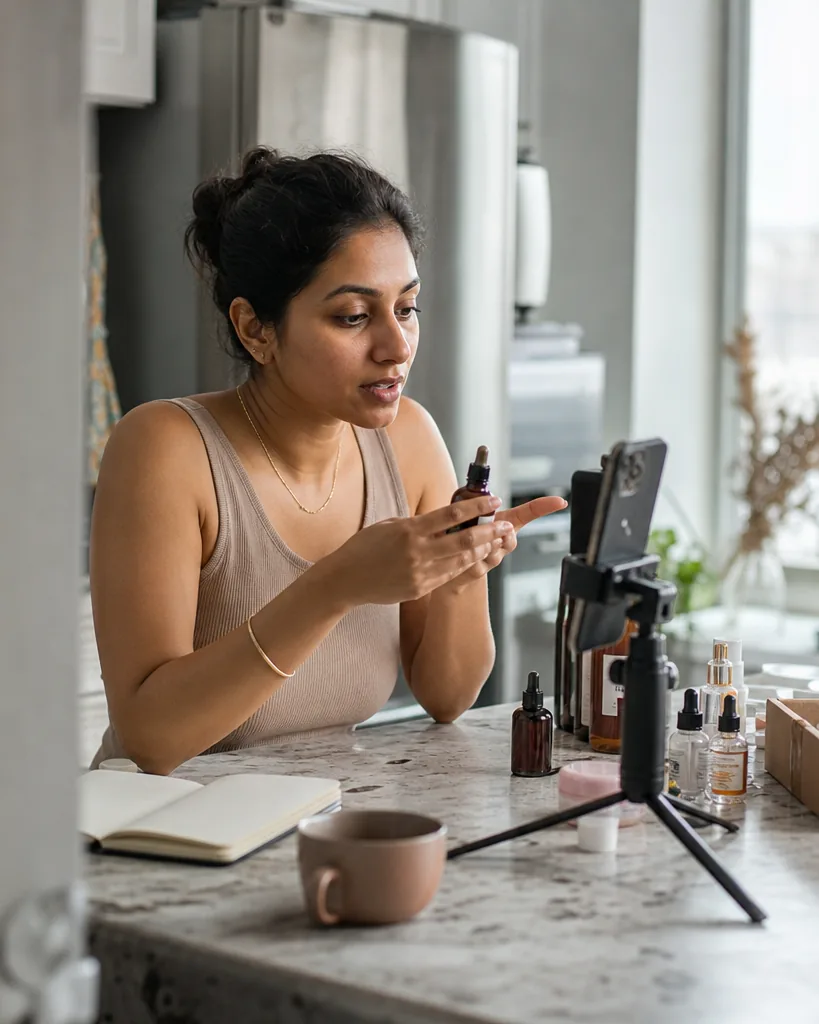
What each setup looks like
UGC stands for user generated content, the casual, phone style videos and photos that feel like a real customer talking about a product. Brands now plan this content on purpose and pay creators to make it. There are two main ways to do that.
At home, the creator receives your product, films in their own space with their own phone and lighting, and sends files back. On set, you book creators for a fixed block of hours, bring them to a studio or a styled location, and film with your own team or a small crew guiding the takes.
Neither approach is better in every case. The right choice depends on what the content is for, how much control you need and how fast you want it.
How the two setups compare
Control over the result
- On set
- High, you direct each take live
- At home
- Lower, you rely on the brief and revisions
Look and feel
- On set
- Can be polished or casual, your choice
- At home
- Naturally casual and personal
Videos per creator
- On set
- Many in one session
- At home
- Usually a few per delivery
Speed to first files
- On set
- Same day on set, edits after
- At home
- Depends on shipping and the creator's schedule
Typical cost structure
- On set
- Hourly, half day or day rate plus usage
- At home
- Often a per video fee plus usage
Extra costs
- On set
- Studio, crew, travel, catering
- At home
- Product shipping, possible reshoots
Best for
- On set
- Hero ads, launches, many variations at once
- At home
- Testing hooks, steady volume, real home settings
Rates for both vary widely with the creator's experience, the city, the hours and the usage you need, so compare total cost per usable video rather than the headline fee.
Launches and hero ads
If a video will carry a big paid campaign, small details matter. Product labels must read clearly, colors must match, and claims must be said exactly right. On set you see each take as it happens and fix problems on the spot.
Many variations in one go
Ad teams often want the same script with five different openings, three lengths and two backgrounds. A creator on set can film all of that in an afternoon, while a home brief with this many versions tends to slip or come back half done.
Products that need care
Large items, fragile products, anything that needs a specific setup or demonstration, and products you cannot easily ship all work better on set. You control the props, the space and the light.
Several creators in one scene
If you want two people talking, a reaction shot or a couple using a product together, a set day is much simpler than coordinating two homes.
Real spaces feel real
A kitchen with actual clutter, a bathroom shelf with a creator's own products, a car on a morning commute. These settings make content feel honest, and they are hard to fake in a studio.
Steady volume at lower cost
For brands that need fresh videos every week to keep ads from going stale, home content scales well. There is no studio to rent and no crew to pay, so the cost per video tends to be lower.
Hybrid days in the creator's own space
A third option sits between the two. You book a creator for a few hours and send a small crew, or just a producer, to their home or a rented apartment. You keep the lived-in look of a real space while someone from your side watches takes, checks labels and asks for one more version of the hook. It costs more than a pure home delivery, yet far less than a full studio day.
Testing before you spend big
Home videos are a good way to test which hooks and angles work. Once a message wins, you can book a set day to film a polished version with the creator who made it work.
Tips for on set days
- 01Book enough hours. Creators need time to warm up, and the best takes often come after the first hour.
- 02Write a loose script with key points, then let the creator say it in their own words.
- 03Film each hook as a separate take so editors can mix and match.
- 04Keep phone footage in the plan if you want a native look, even with a camera on set.
- 05Plan breaks, water and snacks, because talking to camera for hours is tiring.
Tips for at home content
- 01Send a clear brief with must say points, things to avoid and a target length.
- 02Ask for raw files plus one edited version, so your team can re-cut later.
- 03Agree on revisions up front, including how many and what counts as a reshoot.
- 04Give a clear deadline and allow for shipping time.
- 05Check light and sound on the first file and give quick feedback before the rest arrive.
The same rights questions apply either way
Whether a creator films in a studio or in their living room, you still need permission to use their likeness and a clear usage agreement. Paid ads, long terms and exclusivity usually cost more than organic posts on your own account. Agree media, territory, term and exclusivity before filming starts, and keep the signed documents with the project files.
Book creators for the hours you need, in person or remote
ShootModel lists UGC and content creators next to models, actors and other shoot talent. You search by city or remote, date, hours and budget, and see creators who are free with the rate for your booking length.
- 01Book a creator for a set day in your city, or book remote hours when they film at home.
- 02Use a shoot request to send one brief to all matching creators and collect confirmations.
- 03Each booking creates a model release and a usage license with the media, territory, term and buyout you chose in checkout, signed electronically by both sides.
- 04The booking amount is held until the job is done, and creators receive their payout two days after completion if no dispute is opened.
- 05Every creator is a verified adult, checked before their profile goes public.
FAQ
01Is UGC filmed on set still real UGC?
It can be. What makes UGC feel real is the creator's voice, phone style framing and natural delivery. A light touch on set keeps that feel while giving you more control over product and claims.
02Which is cheaper, on set or at home?
At home usually costs less per video because there is no studio or crew. On set can still win on cost per usable video when you need many versions or perfect product shots in one session.
03Can I mix both approaches?
Yes, and many brands do. Home content works well for steady volume and testing hooks. Set days work well for launches and hero ads built on the ideas that tested best.
04Do UGC creators need a model release?
If their face, voice or likeness appears in content that promotes your brand, a release and a clear usage agreement are the norm, just as with models on a shoot.
05How do I book a creator for remote work on ShootModel?
Search with remote as the location, pick the date and hours, and book a creator who is free. The release, usage license and payment run through the same booking as an in person shoot.